After the Flu Season: How Practices Manage the Phone Rush with AI
Following a flu wave, medical practices see up to 40% more calls, but an AI phone assistant can provide crucial relief within hours.
Oliver Wimmer ·
After the Flu Season: How Practices Manage the Phone Rush with AI
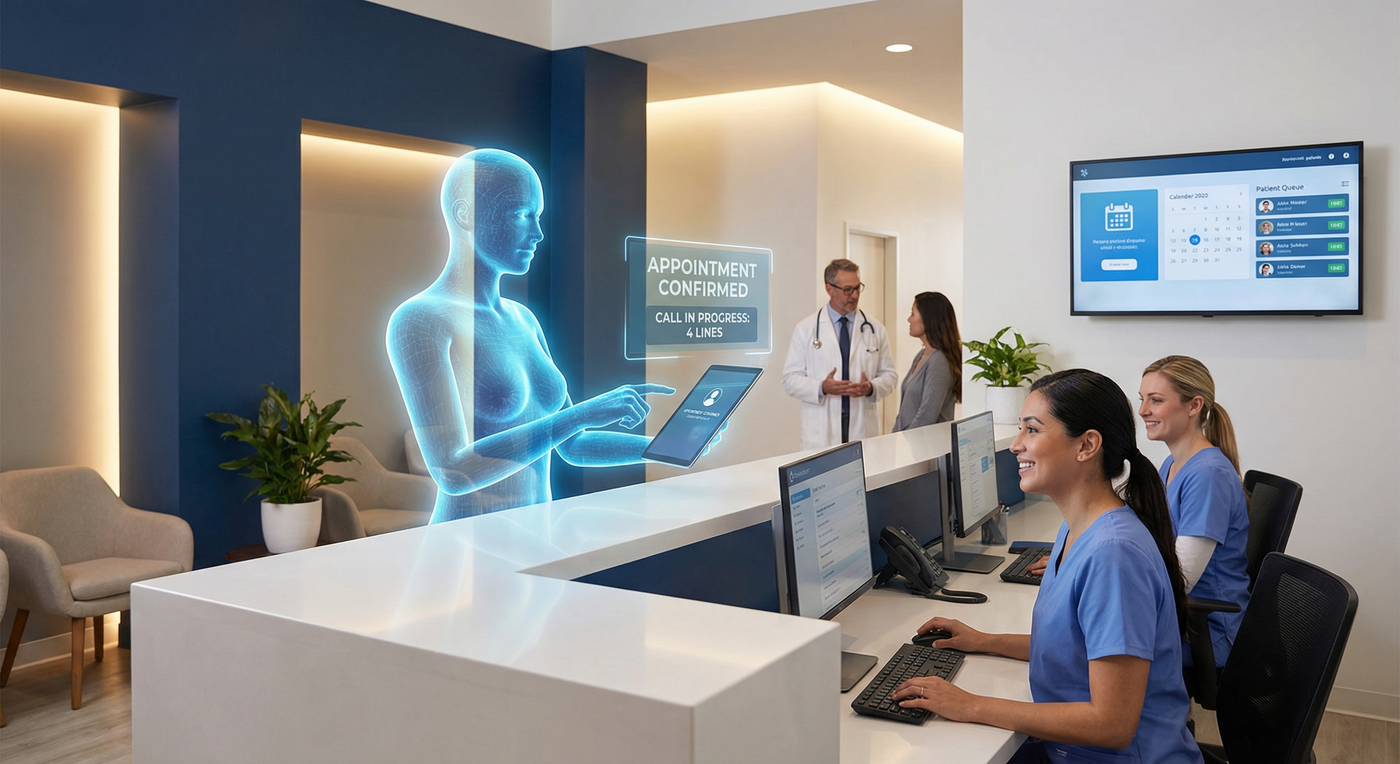
While the flu wave subsides, the problem remains: thousands of delayed calls, overworked practice staff, and full waiting lists. An AI phone assistant can provide crucial relief here within hours.

Intensive care units are seeing relief. Incidence rates are dropping. For doctors, the "normal" post-flu period is theoretically beginning.
But reality looks different: the phones keep ringing. Patients are calling in-with a delay. Follow-up prescriptions, AU-Bescheinigungen (sick notes), follow-up appointments. The practice staff is at its limit, and MFA (medical assistant) frustration is rising.
This is where AI-supported phone assistance comes in-not as a vision of the future, but as an immediately available solution.
The Post-Flu Syndrome: The Numbers Behind the Surge
The RKI (Robert Koch Institute) figures show it clearly: after a severe flu wave, phone traffic in medical practices remains 4-6 weeks above normal levels. The reasons:
- Follow-up prescriptions: Antibiotics, cough syrup, fever medication-everything needs to be caught up on
- AU extensions: Patients need certificates for returning to the workplace
- Follow-up appointments: Especially for high-risk groups and older patients
- Preventive counseling: "Do I need a flu shot for next year?"
Fact: An average Allgemeinarztpraxis (general practice) records up to 40% more calls after an intensive flu wave-with the same or even reduced staff (due to illness).
Why Traditional Solutions Fail
Many practices have tried to respond using classic methods:
- More phone lines: Cost-intensive, difficult to staff
- Phone intake freezes: Frustrate patients, prevent necessary care
- Overtime for MFAs: A short-term solution that leads to burnout
- External answering machines: Impersonal, often not GDPR-compliant
The problem: demand fluctuates massively. On some days, there are 200 calls; on others, 80. Fixed staff cannot scale flexibly enough.
The AI Phone Assistant for Peak Load Management
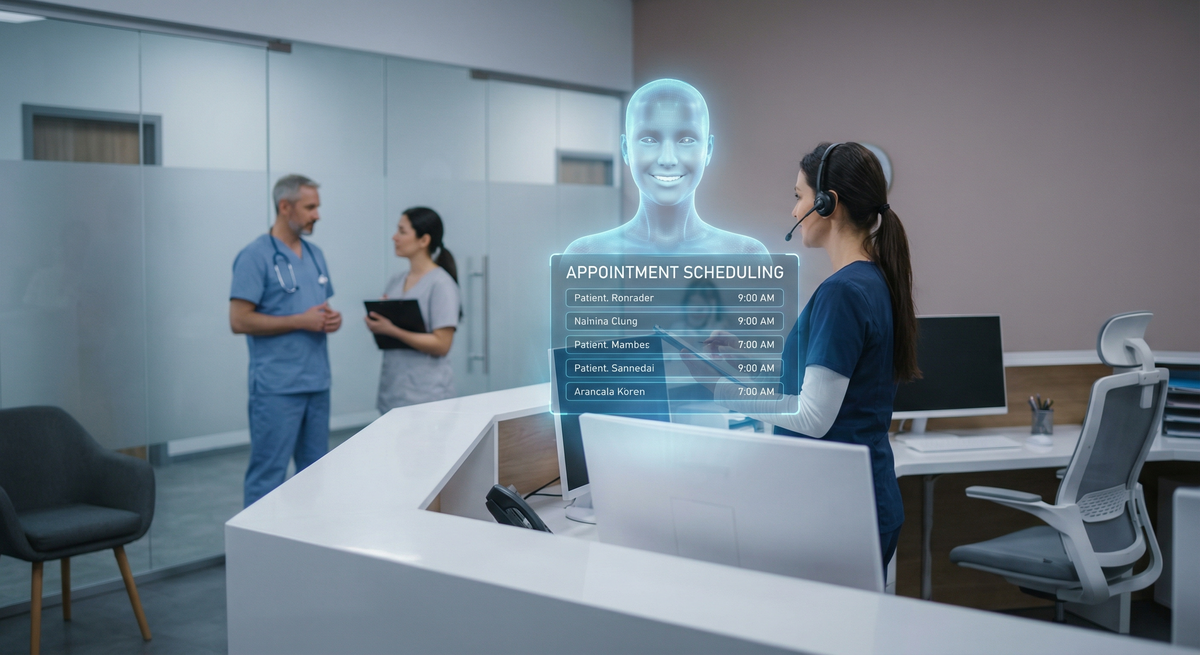
An AI-based phone assistant works differently. It scales automatically with the load-whether that is 50 or 500 calls per day.
Here is how it relieves the practice:
1. Automated Appointment Scheduling (60-70% of calls)
The most common requests after a flu wave:
- "I need an appointment for a follow-up examination"
- "Can you issue me a prescription?"
- "My son still has a cough, when can he come in?"
The AI assistant:
- Checks availability in real time
- Suggests suitable appointments
- Confirms immediately via SMS
- Reserves the slot in the practice calendar
Result: No holding times, no overworked MFAs, satisfied patients.
2. Intelligent Triage (20-25% of calls)
Not every call requires a practice visit. The AI assistant can:
- Differentiate between "urgent" and "can wait"
- Ask standard questions (duration of symptoms, medication intake)
- Delegate based on the doctor's instructions
- Route directly to the MFA or the doctor if necessary
Example: "You have had a cough without a fever for 3 days? Let me reserve an appointment for next week. If the symptoms worsen, please call again."
3. Automating Administrative Tasks (10-15% of calls)
- Prescription refills: Recording, verification, forwarding to the practice system
- AU-Bescheinigungen: Scheduling follow-up certificates
- Vaccination counseling: Information on available vaccines and appointments
Concrete Figures from the Practice
An Allgemeinarztpraxis in Munich implemented the Servus KI phone assistant after the 2024/25 flu season:
Before:
- 180 calls per day (peaks up to 240)
- 20 hours of MFA phone time per week
- Average wait time on the line: 4-5 minutes
- 12% missed calls
After (with AI assistant):
- 85% of calls fully handled by AI
- 4 hours of MFA phone time per week (80% reduction)
- Average wait time: under 30 seconds
- Less than 2% missed calls
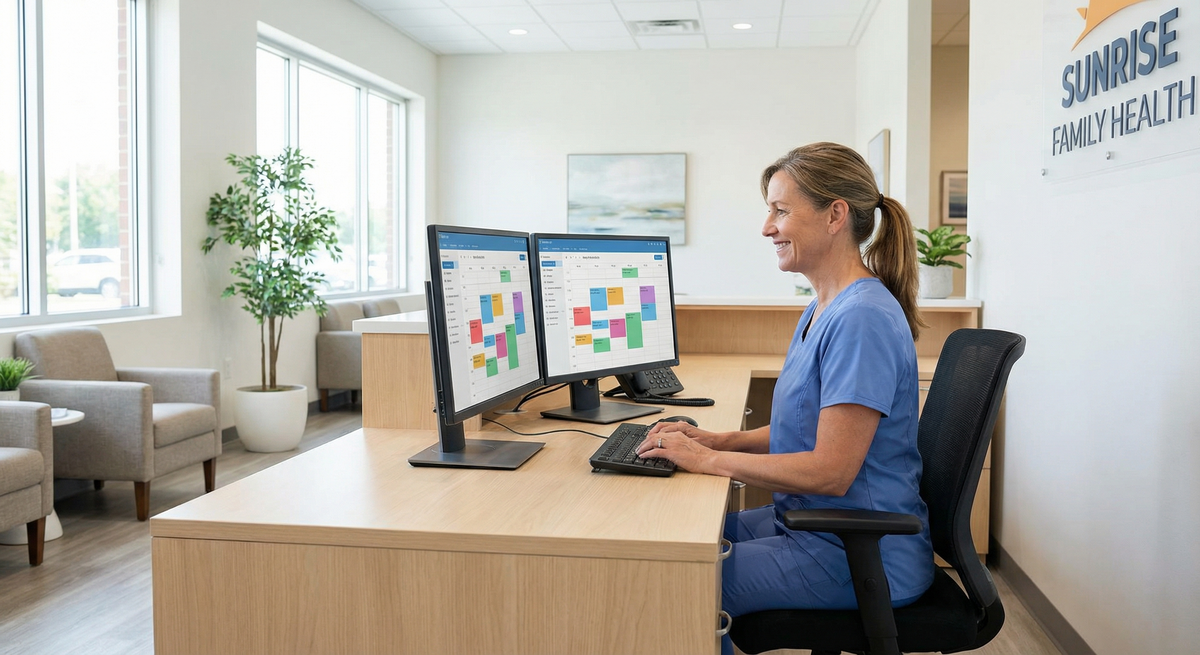
What this means for the practice:
- The MFA can focus on patients on-site
- No more overtime necessary
- Higher patient satisfaction through immediate accessibility
Integration with Your Practice Software
A frequent point of criticism is: "That won't work with our software."
Servus KI is compatible with all common practice management systems:
CGM (CompuGroup Medical)
As one of the market leaders, CGM offers various interfaces. Integration takes place via standardized APIs or, if necessary, via secure middleware.
MedStar
Through the wis.at platform, MedStar offers flexible integration options that enable real-time calendar synchronization.
DocDena, Tomedo, and others
Here, too, we work with standardized interfaces (API, HL7, REST, Webhook) to ensure seamless integration.
Important: The integration is carried out by the Servus KI team-without any additional effort for your IT.
Is an AI Assistant GDPR-Compliant?
Yes-if it is implemented correctly. Servus KI meets all requirements:
- Data processing: Exclusively on servers in Germany
- Encryption: End-to-end for all phone calls
- No storage of sensitive health data: The assistant only records appointment data, no diagnoses
- Deletion periods: Automatic deletion after defined periods
- Patient consent: Transparency that an automated assistant is being used
FAQ: Frequently Asked Questions About AI Telephony
Q: How long does the setup take? A: Usually 1-2 weeks including integration, training, and testing phase. Emergency setups are possible in 48 hours.
Q: What happens if the AI assistant doesn't know what to do? A: The caller is automatically routed to your MFA-seamlessly and with context transfer.
Q: Can patients tell the difference from a human? A: Yes, and that is intentional. Transparency is important to us. The assistant introduces itself at the beginning of every call.
Q: How much does an AI phone assistant cost? A: The costs depend on the call volume. A typical model: base fee + per processed request. Compared to additional staff, it is usually significantly cheaper.
Q: Can the assistant also work outside of consultation hours? A: Yes-24/7 availability is possible. Patients can also book an appointment for the next day at 22:00.
The Right Strategy for the Post-Flu Phase
For practices that want to return to normal operations after an intensive flu wave, we recommend a 3-step plan:
Step 1: Immediate Relief (Week 1)
- Activate AI assistant for appointment scheduling
- Set up automated prescription refills
- MFA training: How does the handover work?
Step 2: Optimization (Weeks 2-4)
- Analysis of call data: Which requests come up most frequently?
- Fine-tuning of the AI scripts
- Gather patient feedback
Step 3: Long-Term Efficiency (from Week 5)
- Expansion to other tasks (vaccination counseling, preventive consultations)
- Integration of additional communication channels (SMS, email)
- Continuous improvement based on practice data
Conclusion: Using the Post-Flu Period as an Opportunity
The flu wave has shown where the pain points lie: phone accessibility, scalability, and personnel resources.
An AI phone assistant is not a replacement for human practice staff-it is a tool that relieves your team and provides faster care for your patients.
The question is no longer: "Can my practice afford AI?"
The question is: "Can I afford inefficient telephony any longer?"
About the Author: Oliver Wimmer is Head of Communication at Servus KI and guides doctors through the digital transformation of their practice processes. With over 50 successfully implemented AI phone assistants, he knows the challenges and solutions firsthand.
Would you like to learn how an AI phone assistant can relieve your practice? Contact us for a non-binding consultation.