
Not every call comes in. Some have to go out.
Servus KI also handles the calls your practice has to make itself: callbacks, appointment changes, reminders about check-ups that are due. Your team does not have to pick up the phone between two patients for that.
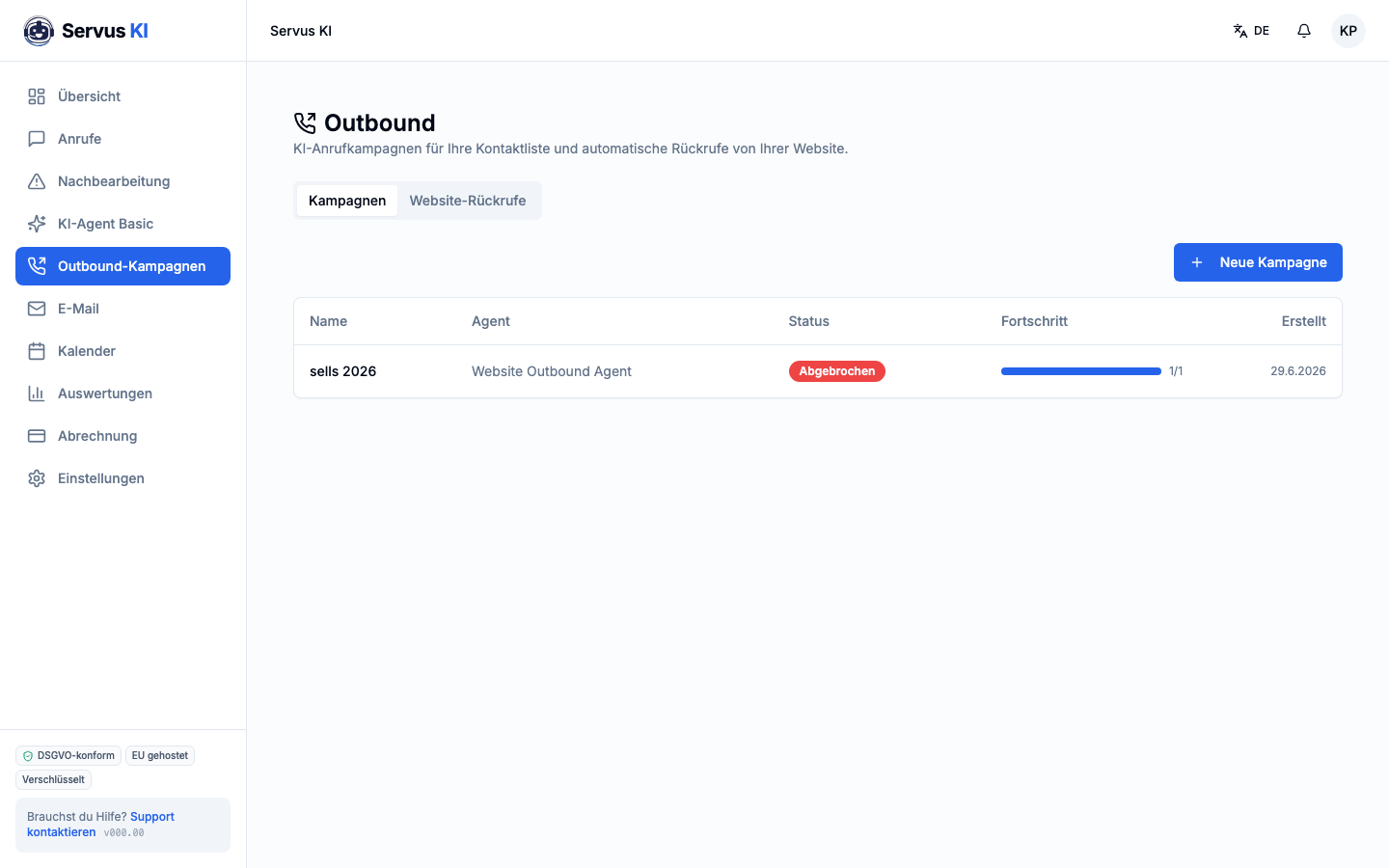
What is behind it
01
You provide the list, not us
Servus KI calls only the contacts you enter. There are no numbers coming from any other source.
02
You see the progress
For each campaign you see how many contacts have been handled and with what result. A running campaign can be stopped at any time.
03
The result lands in the same list
Outbound calls appear with a summary and category in the call overview, exactly like incoming ones. You have one state of play, not two.
04
Reception loses no time to ringing tones
A callback where nobody picks up still costs your team time. Servus KI also handles the attempts that come to nothing.
How it works in practice
- 1
The practice enters a list of patients whose annual check-up is due and who have agreed to the reminder service.
- 2
Servus KI calls, reminds them about the check-up due and offers an appointment.
- 3
Appointments agreed are in the calendar. Anyone who could not be reached is in the follow-up list.
With and without
Today
- Callbacks happen between two patients, or not at all.
- Reminders about check-ups are left because there is never a quiet minute.
- Anyone who could not be reached is forgotten.
With Servus KI
- They run without anybody in the practice needing time for them.
- They get worked through.
- They are in the follow-up list.
Related
Frequently asked questions
Who does Servus KI call?
Only the contacts you enter yourself, and only within the scope of the consent you hold.
Can we stop a running campaign?
Yes, at any time.
What happens if nobody picks up?
The contact lands in the follow-up list so that you can decide how to proceed.